Building a Home in 2027? 5 Things That Changed This Month, Explained in Plain English
NMLS #769327 | CA Contractor License #1010953 | Licensed General Contractor
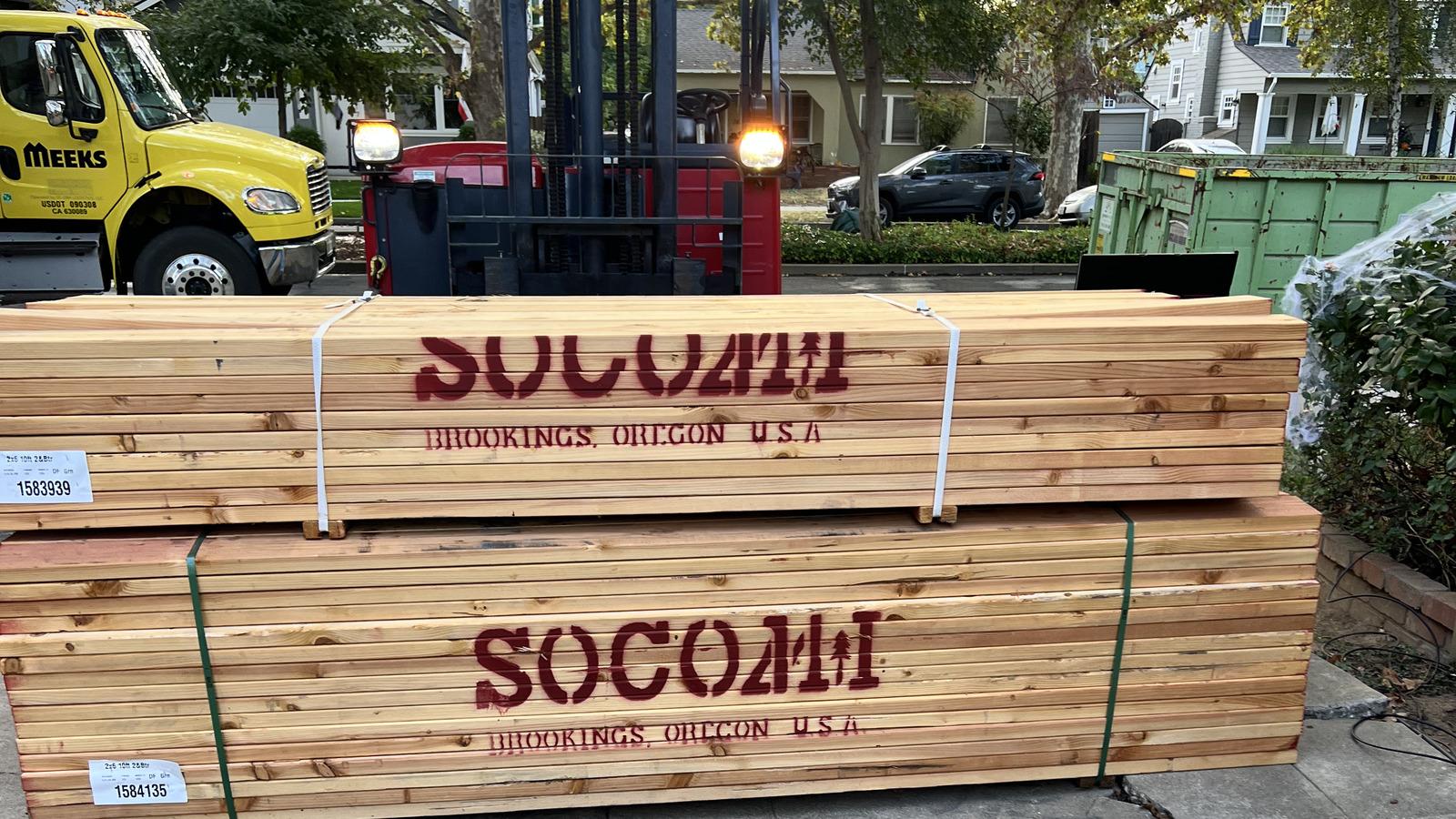
There’s a moment on every build that never gets old for me: the day the foundation is poured. Up to then, your new home is a set of drawings and a lot of conversations. Then the concrete goes in, and suddenly it’s real.
I’m Aaron Meilich. I’ve spent 30 years in construction lending, and for the most recent 7 of them I’ve been building homes as well as lending on them. I’m also a Licensed General Contractor in California (CA #1010953). If you’re dreaming about building a home in 2027, a lot happened in the past few weeks that’s worth knowing about, and much of it is good news. Here are five things that changed, in plain English.
The Quick Answer
- Lumber got cheaper for six weeks in a row, though some other materials are still pricey.
- Mortgage rates eased for four straight weeks to a seven-week low.
- Cities are rewriting the rules to make it easier and faster to build.
- New homes are changing, with more defined rooms, more space for family, and more “quiet” comfort features.
- Winter is planning season, and the planning you do now can shape your 2027 build.
1. Lumber Prices Have Come Down (But Not Everything Is Cheaper)
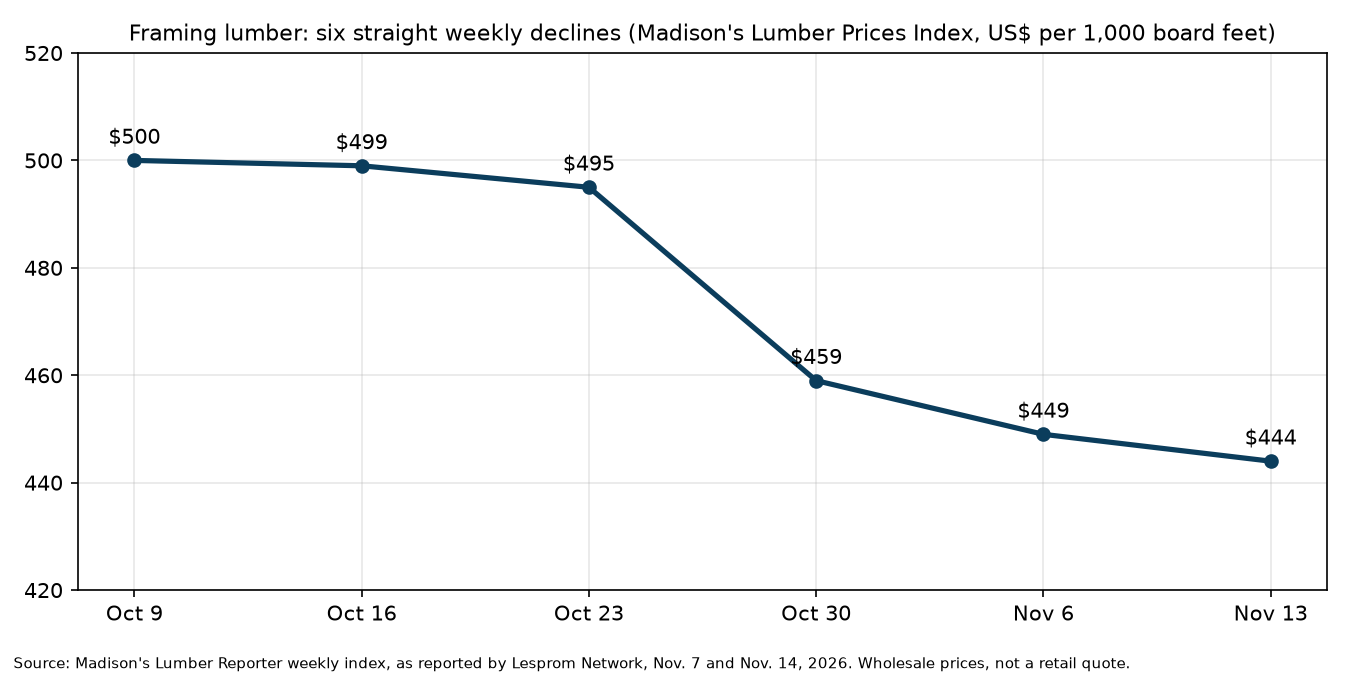
Lumber is the wood used to frame the walls and roof of most homes, so its price matters. A widely followed index of wholesale framing lumber prices fell to $444 per 1,000 board feet for the week ending Nov. 13. That’s about 10% lower than a month earlier and the sixth weekly drop in a row (Lesprom Network, Nov. 14, 2026).
The fine print: lumber is only one ingredient. Prices for everything that goes into building a new home, including materials, fuel and the services that deliver them, were still about 10.4% higher in October than a year earlier, and plywood was up 24.5% (NAHB Eye on Housing, Nov. 13, 2026).
What it means for you: builders’ prices won’t drop overnight, but a softer lumber market can help when you’re getting bids. Ask your builder how long their price is good for and what could change it.
2. Mortgage Rates Eased for Four Weeks in a Row
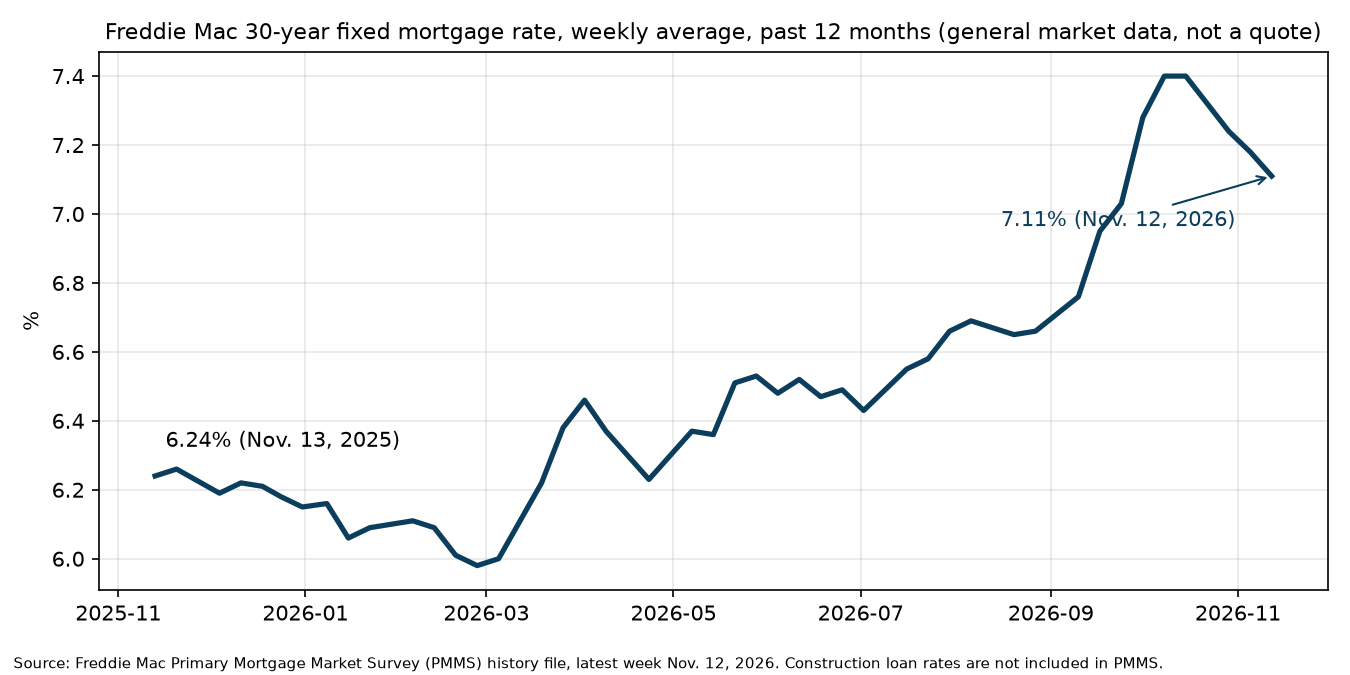
As of Nov. 12, 2026, Freddie Mac’s average 30-year fixed mortgage rate was 7.11%, down from 7.18% a week earlier. It was the fourth weekly decline in a row and the lowest level in seven weeks. A year ago, it was 6.24% (Freddie Mac PMMS, Nov. 12, 2026).
A construction loan isn’t the same as a regular mortgage, and Freddie Mac’s survey doesn’t track construction loans. In my experience, construction loan rates typically run about 0.75% above conventional mortgage rates, which would put a typical construction loan somewhere around 7.9% as a general market average. Your own rate depends on your program, your credit and your project.
What’s an APR? The annual percentage rate (APR) includes your interest rate plus certain loan costs, so it gives you a fuller picture of what borrowing costs. Rates shown are national market averages for general information only. They are not an offer, quote or rate lock, and the roughly 0.75% difference is a general rule of thumb, not a pricing promise. Your actual rate and APR depend on credit, loan program, property, loan amount and market conditions. Subject to credit approval; not a commitment to lend. Equal Housing Lender.
3. Cities Are Making It Easier to Build
Two words come up a lot when you build: zoning (the local rules about what can be built on a piece of land) and permits (the official approvals you need before and during construction). Both are getting attention:
- New York City voters approved a plan to replace about 40 separate approvals from 18 city offices with one Department of Buildings permit hub (CRE Daily, Nov. 9, 2026).
- Dallas released the first draft of its first major zoning rewrite in more than 40 years, aimed at allowing smaller homes on smaller lots. Public meetings start Nov. 18 (City of Dallas, Nov. 6, 2026).
- Ohio’s three biggest cities are lining up “pre-approved” home plans that the city reviews once, so people who use them face fewer surprises at the permit counter (Government Market News, Oct. 16, 2026).
- Milwaukee is unveiling proposed zoning changes this week, with public sessions Nov. 17, 19 and 20 (Hoodline, Nov. 13, 2026).
Not every change goes the builder’s way. Massachusetts voters narrowly turned down a measure that would have allowed homes on smaller lots (NBC Boston, Nov. 6, 2026), and Charleston, S.C., is moving to raise permit fees about 50% in January (The Post and Courier, Nov. 13, 2026).
What it means for you: rules are local. Before you fall in love with a lot, ask the city or county what you can build there, how long permits are taking, and what the fees are.
4. What New Homes Are Starting to Look Like
Zillow studied millions of home listings for its 2027 Home Trends Report and found mentions of multigenerational living up 58%, home offices up 42%, flex spaces up 35%, whole-home batteries up 43% and fresh-air ventilation systems up 52% (Zillow, Nov. 10, 2026). Kitchen designers surveyed by the National Kitchen & Bath Association expect more defined zones instead of fully open layouts, plus mudrooms, walk-in pantries, and features like leak detectors and automatic water shut-off valves (Kitchen & Bath Design News, Nov. 5, 2026).
What it means for you: building new is your chance to get exactly this. A room for Grandma, an office with a door, a mudroom where the boots go. It’s much easier to plan these in than to add them later.
5. Winter Is Planning Season
NOAA expects a warmer-than-average winter across much of the northern U.S. and a wetter-than-average one across the South and along the East Coast (NOAA Winter Outlook, Oct. 15, 2026, via US Harbors). Some builds keep going right through winter. For many families, though, these months are the perfect time to get everything ready for a spring start. Here’s a simple checklist:
- Get pre-qualified for a construction loan so you know your budget before you shop for land or plans.
- Find your lot, or confirm what you can build on the one you have.
- Choose a licensed, insured builder and ask for references.
- Work through your plans and selections (floors, cabinets, fixtures) now. Early choices keep the schedule on track.
- Ask about permits and fees in your city or county, so there are no surprises.
How a Construction Loan Works, in Plain English
A construction-to-permanent loan is one loan that pays for building your home and then becomes your regular mortgage when the home is finished. Instead of handing your builder all the money up front, the loan pays out in draws, which are payments made as each stage of work is completed and checked.
Here’s a feature many of my clients are surprised by: on the construction-to-permanent programs I work with, the appraisal is typically based on the home’s “as-completed” value, meaning what your home is expected to be worth once it’s built according to your plans, not just the value of the empty lot. That helps your loan reflect the home you’re actually building. (Appraisal requirements and loan amounts vary by program; subject to credit approval.)
Frequently Asked Questions
Is 2027 a good time to build a home? It depends on your plans and your budget, but some conditions are improving: lumber prices fell for six straight weeks through Nov. 13, and mortgage rates eased four weeks in a row. Other building costs are still higher than a year ago, so get current bids from your builder.
What is a construction-to-permanent loan? It’s one loan that pays for building your home and then turns into your regular mortgage when the home is finished, with one application and one closing.
How do construction loan rates compare with regular mortgage rates? As of Nov. 12, 2026, Freddie Mac’s average 30-year fixed rate was 7.11%. Construction loans typically run about 0.75% above conventional mortgage rates, depending on the program, borrower and project. These are market averages, not a quote; your rate and APR will vary.
What does “as-completed value” mean? It’s the appraiser’s estimate of what your home will be worth once it’s finished according to your plans. Many construction-to-permanent programs base the loan on that value. Requirements vary by program.
What is a construction loan draw? A draw is a payment from your construction loan to your builder after a stage of work, like the foundation or framing, is finished and checked.
Can I build in the winter? Often, yes. Builders protect fresh concrete from freezing, use temporary heat and get the house closed in quickly. Many families also use winter to finish planning for a spring start.
Let’s Plan Your 2027 Build Together
Building a home is one of the most exciting things you’ll ever do, and you don’t have to figure it out alone. I’ve stood on the jobsite and sat at the closing table, and I love helping families turn a dream and a set of plans into a real budget and a real schedule.
Get prequalified at ConstructionLoans.homes or call (916) 798-3000 to talk through your plans and construction financing options. No pressure, just a conversation about what’s possible.
— Aaron Meilich, Construction Lending Specialist, ConstructionLoans.homes
About the Author
Aaron Meilich is a licensed General Contractor and Construction Mortgage Specialist (NMLS #769327, CA Contractor License #1010953), based in Sacramento, California. He has about 30 years in construction financing and has also been building homes for the last 7 years. He originates VA, Conventional, and Jumbo one-time-close construction-to-permanent loans, and helps families and builders nationwide. Licensed in all U.S. states except Hawaii and New York. Call (916) 798-3000 or get prequalified.
Aaron Meilich, NMLS #769327 | CA Contractor License #1010953 | Equal Housing Lender. Subject to credit approval; not a commitment to lend. Licensing & disclosures: www.FundandBuild.com. For licensing information, visit www.nmlsconsumeraccess.org.
Featured Construction Loan Programs
Nationwide lending solutions customized to your build
Licensed in all U.S. states except Hawaii and New York.
Single closing with upfront rate lock and automated 30-year conversion.
VA, Conventional, and Jumbo one-time close construction loans.
Zero down payment, no monthly PMI custom home builds for veterans.
Ready to Structure Your Construction Loan?
Calculate your monthly construction interest, evaluate project equity, and get pre-qualified in under 3 minutes.